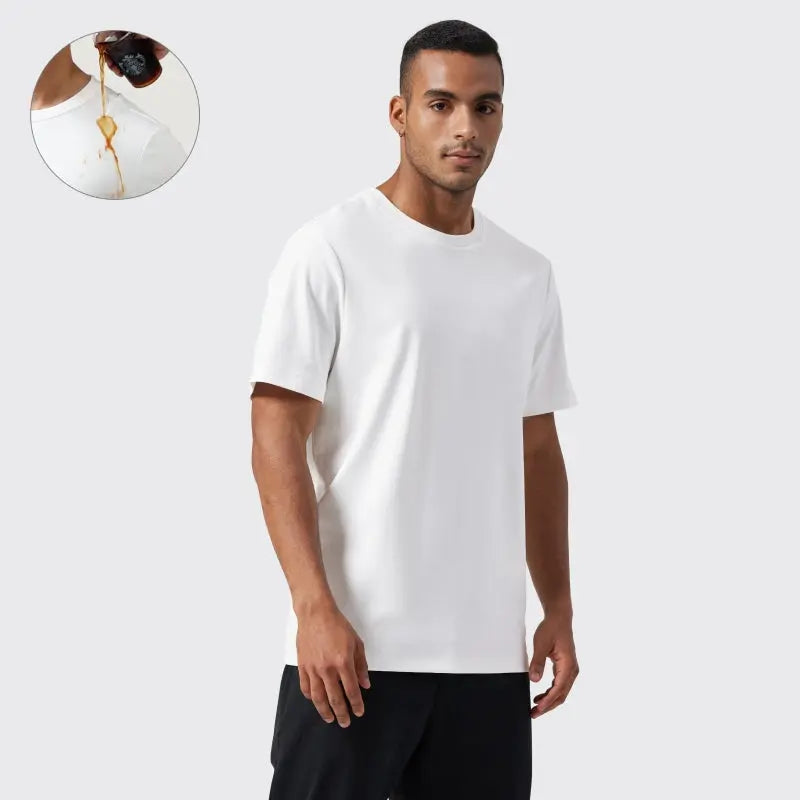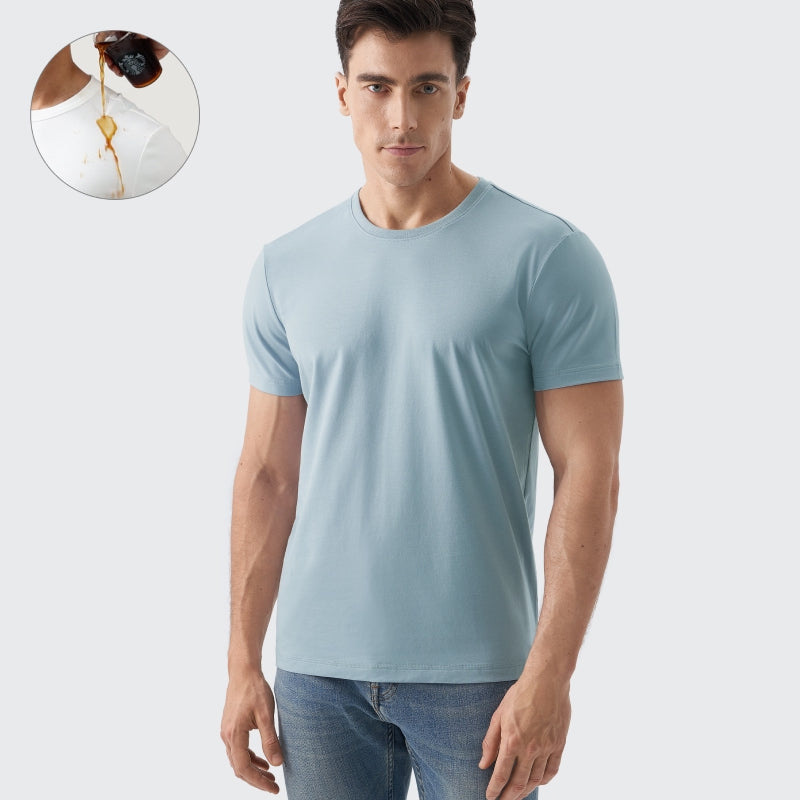





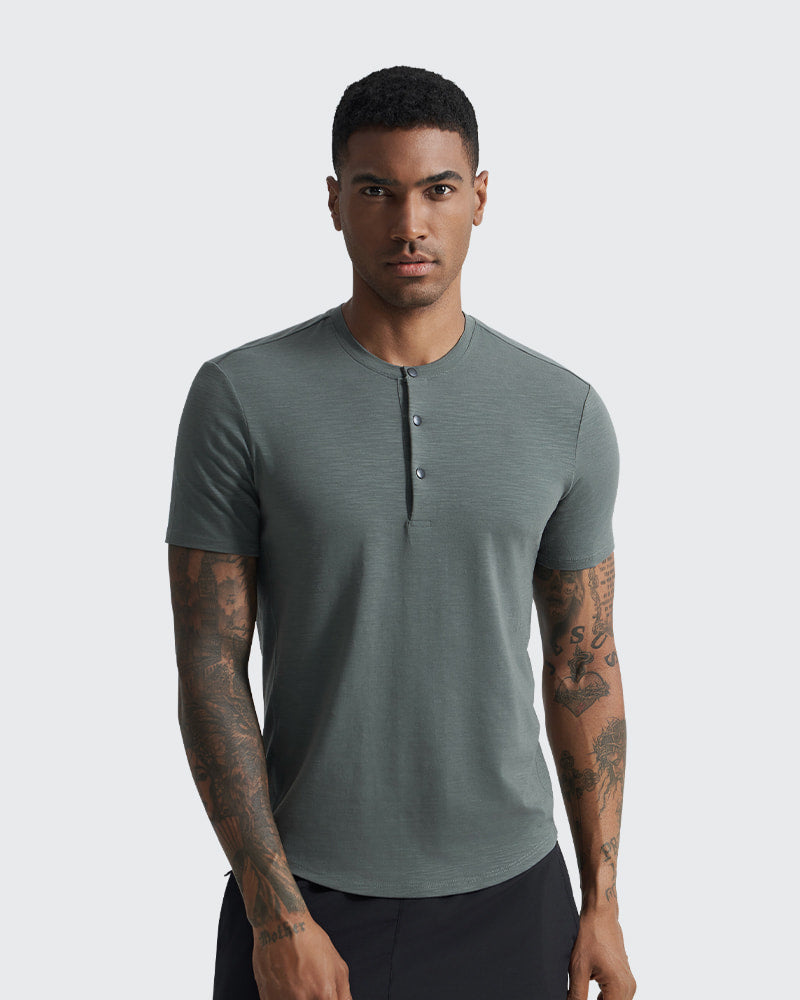
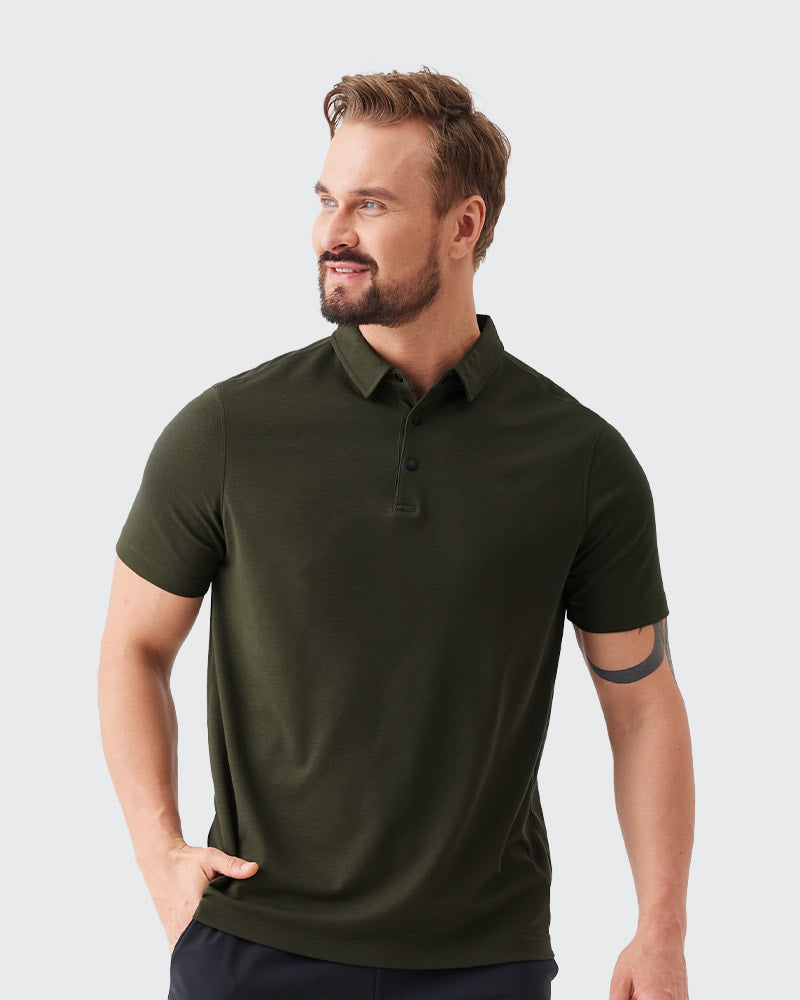

Slub cotton tees and engineered tees occupy different positions in a 2026 menswear wardrobe rather than competing head-to-head. Slub cotton — classic Americana texture from intentionally uneven yarn — delivers an irregular, lived-in surface that pairs beautifully with raw denim and chinos. Engineered tees — pattern-graded shoulders, true side seams, technical finishes — deliver consistent silhouette and stain-repel performance. Most men benefit from owning both: slub for weekend texture, engineered for office and travel.
The slub-cotton revival ran hard from 2020–2024, driven by classic Americana menswear brands building heritage-styled tees in 200–240 GSM heavy slub knits. The aesthetic appeal is real: the uneven yarn surface catches light differently across the body, the heavier weight tucks well into chinos, and the fabric ages into a "broken-in" look over 50–100 wears. Buck Mason, J.Crew Broken-In, Velva Sheen, Madewell, and Faherty all anchor a slub-cotton offering.
The engineered-tee track ran in parallel, driven by performance menswear brands building pattern-graded shoulders, technical finishes, and recovery-blend fibers into tailored silhouettes for office and travel. The aesthetic is opposite: smooth surface, consistent drape, no texture noise. The two are complementary, not competing — this guide breaks down where each wins and why a balanced wardrobe usually contains both. Hero pick for the engineered side: TexTale FRESH Stain-Repel Signature Tee at $42.
$48 average spent on a single slub-cotton heritage tee in the US in 2024 — the Americana menswear category grew 14% year-on-year as men diversified wardrobes away from pure athleisure toward heritage and engineered options. Source: Cotton Incorporated Lifestyle Monitor, 2024.
What is slub cotton and what does it do for the way a tee looks and feels?
Slub cotton is a yarn type with intentional thickness variation along its length, spun from longer-staple fibers (often pima or supima cotton) at lower twist counts. The result is a fabric surface with visible texture — small bumps and thinner sections distributed across the shirt — rather than the uniform smoothness of ring-spun jersey. Slub knits typically run heavier (200–240 GSM) and develop a ‘broken-in’ patina after 50–100 wears.
The technical origin of slub cotton is industrial: in the early days of mechanized spinning, slubs were defects. Modern slub yarn intentionally introduces these variations to evoke pre-industrial hand-spun fabric. The aesthetic positioning is heritage Americana — the fabric reads as ‘old-school workwear’ in a way that smooth jersey never does. Velva Sheen built a niche cult on Japanese-loomed heavyweight slub for two decades; Buck Mason scaled the look to the broader US menswear market.
Functional differences from engineered jersey: slub fabric is heavier, less breathable, drapes more rigidly, and develops surface character with wear. The 'heavier weight (200–240 GSM versus 160–180 for engineered tees) makes 'slub layer poorly under tailoring — the texture telegraphs through a thin blazer and the bulk shows at the waist. For office contexts, this is a strike against. For weekend wear with denim, the same weight is a plus — the shirt holds its own under unwashed selvedge denim and reads casually but considered.
The slub-tee field includes Buck Mason ($38–48), J.Crew Broken-In ($25–35), Velva Sheen ($75–95), Madewell ($35–48), and Faherty ($48–58). The premium-end brands use longer-staple cotton and Japanese-loomed fabrics; the mass-market end uses shorter staple at lower twist counts. Across our wear logs, premium slub holds texture through 30 washes while mass-market slub flattens out by wash 15. None of these brands offers stain-repel finishes, which is the trade-off for slub aesthetic — the texture grabs liquid where smooth jersey would shed it. Pair a slub tee with the FRESH Signature Tee for the contexts where slub fails: office layering, travel, and any meal where a stain risk is real.
Where does an engineered tee outperform a slub cotton tee?
Engineered tees outperform slub cotton in five contexts: office layering under blazers (smooth surface doesn’t telegraph), warm-weather wear (lighter GSM breathes), travel (recovery-blend fiber resists wrinkles), stain-prone meals (PFAS-free hydrophobic finish sheds spills), and 30-wash silhouette retention (pattern grading and elastane prevent the bag-out that affects pure-cotton slub knits).
Office layering is the clearest engineered-tee advantage. A 170 GSM cotton-modal blend lays flat under a blazer with no texture telegraphing through; a 220 GSM slub knit shows ridges, especially in side-light from a window. The drape difference is visible in a mirror and amplified in flash photography. For dressy or business-casual office contexts, an engineered tee is the right tool.
Travel performance also tilts toward engineered. Slub cotton at 220 GSM packs heavy and wrinkles in a duffel; engineered cotton-modal at 170 GSM packs lighter and the modal-elastane combination resists creasing. Stain-repel finishes (PFAS-free hydrophobic on the FRESH line) shed coffee, red wine, and olive oil for the first 30–50 home washes — meaningful when you are eating in restaurants and airports without easy laundry access. None of the slub brands ship with a stain finish; the texture would interfere with the bonded chemistry.
Silhouette retention through 30 washes is the under-discussed metric. A pure-cotton slub tee — even premium Japanese-loomed slub — lacks elastane, so the shoulder and chest gradually bag out as the cotton fibers relax. Engineered cotton-modal-elastane blends recover after each wash and hold the original silhouette. After 30 AATCC 135 dimensional-stability wash cycles, the FRESH Signature Tee posted <2% dimensional change; comparable Buck Mason and J.Crew slub tees posted 4–7% change with visible bagging at the chest panel.
Should a man own a slub cotton tee, an engineered tee, or both?
Most men benefit from owning both styles in a 1:2 or 1:3 ratio. One slub-cotton heritage tee for weekend Americana looks (denim, chinos, vintage workwear pairings) and 2–3 engineered tees for office, travel, and stain-prone contexts where the engineered finish and silhouette retention matter. The combined wardrobe handles weekday office, weekend casual, multi-day travel, and dinner-out contexts without the limitations of either single style.
The wardrobe-build framework: pick one slub tee in a versatile color (heather gray, ecru, navy) at 200–220 GSM for weekend wear with raw denim or chinos. Add 2–3 engineered tees in core colors (white, black, sierra blue or olive) at 160–180 GSM for office layering, travel, and any context where stains are a risk. The combined four-tee rotation handles 90% of weekly contexts and lasts 3–5 years per shirt with proper care.
For shoppers narrowing to one purchase: pick by dominant context. If your weekly rotation is mostly office and business-casual, an engineered tee delivers more value — the silhouette retention and stain finish protect the per-wear investment. If your weekly rotation is mostly weekend casual with denim or chinos, a slub heritage tee delivers more aesthetic payoff — the texture pairs with the surrounding garments in a way that a smooth engineered tee does not.
For TexTale shoppers building the engineered side of the wardrobe, the FRESH Stain-Repel Signature Tee at $42 is the office-and-travel pick. For relaxed weekend wear with engineered construction (without the slub texture), pair with the FRESH Relaxed Tee at $44. For warm-weather collared situations, the BREEZ Anti-Odor Polo rounds out the engineered side. Browse the full FRESH Collection for the lineup and add a Buck Mason or Velva Sheen slub crew for the heritage side.
| Yarn / weight | Surface texture | Office layering | Stain finish | 30-wash silhouette | Best context | Price | |
|---|---|---|---|---|---|---|---|
| TexTale FRESH Signature (engineered) | Pima-modal-elastane, 170 GSM | Smooth jersey | Excellent (lays flat under blazer) | EasyClean fluorine-free, Grade 4 retained at wash 30 | Holds shape (<2% dim. change) | Office / travel / stain-prone meals | $42 |
| Buck Mason Slub Curved-Hem | 100% pima slub, 220 GSM | Visible slub texture | Texture telegraphs | None | Light bagging at chest by wash 25 | Weekend casual / Americana pairings | $38–48 |
| J.Crew Broken-In Tee | 100% slub cotton, 200 GSM | Lighter slub texture | Visible at flash exposure | None | Bags by wash 15–20 (mass-market staple) | Weekend casual budget | $25–35 |
| Velva Sheen Heavyweight | 100% Japanese slub cotton, 240 GSM | Pronounced slub | Too heavy for layering | None | Holds shape, develops patina (premium) | Heritage Americana enthusiasts | $75–95 |
| Madewell Garment-Dyed Slub | 100% slub cotton, 200 GSM | Soft slub | Texture light visible | None | Bags by wash 18–22 | Weekend casual / women’s line crossover | $35–48 |
| Faherty Cloud Crew | Slub cotton-rayon-spandex, 195 GSM | Subtle slub | Layers OK at lighter weight | None | Holds shape (spandex) | Weekend casual with rayon hand | $48–58 |
"Slub cotton and engineered tees are different wardrobe tools, not competitors. The slub tee solves an aesthetic problem — pairing a tee with raw denim without looking generic. The engineered tee solves a performance problem — layering, stain-repel, silhouette retention. A complete tee wardrobe has both."
— TexTale Editorial, Editorial, TexTale. Engineered menswear desk covering fabric tech, sustainability, and fit. Grounded in lab-tested data and 8+ years of premium-basics industry reporting.
Engineered side covered: FRESH Signature
TexTale FRESH Stain-Repel Signature Tee — pattern-graded shoulders, true side seams, 80% pima cotton with modal drape and elastane recovery, fluorine-free EasyClean stain-repel finish that survives 30 washes. The office-and-travel anchor of an engineered tee rotation. $42 with free US shipping.
Frequently Asked Questions
What is slub cotton and is it a higher quality fabric than regular cotton?
Slub cotton is a yarn type with intentional thickness variation, spun from longer-staple fibers (often pima or supima) at lower twist counts. It is not categorically higher quality than smooth ring-spun cotton — quality depends on staple length, twist count, and weave density. Premium slub from Japanese mills uses longer-staple cotton; mass-market slub uses shorter staple. Slub delivers a heritage Americana aesthetic but does not outperform smooth jersey on durability or comfort.
Why does a slub tee feel heavier than a regular tee?
Slub tees typically run 200–240 GSM versus 160–180 GSM for engineered or smooth jersey tees. The lower-twist yarn requires more fabric weight to achieve the same opacity and structural integrity, which is why the resulting fabric reads as ‘heavyweight.’ The heavier weight tucks well into chinos or jeans and gives the tee a more substantial drape, but it also limits warm-weather wear and office layering.
Will a slub cotton tee shrink more than a regular cotton tee?
Slub cotton shrinks at similar rates to regular cotton (3–5% in cold wash, tumble dry low) because the fiber is the same — only the yarn structure differs. Premium slub tees from brands like Buck Mason and Velva Sheen are typically pre-washed or sanforized to reduce further shrinkage. Mass-market slub tees often skip this step, resulting in 5–8% shrinkage on first wash.
Can I wear a slub cotton tee under a blazer?
Slub cotton at 220–240 GSM is generally too textured and bulky to layer cleanly under a fitted blazer — the slub surface telegraphs through fine wool or cotton blazers, especially in side-light. Lighter slub at 195–200 GSM (Faherty Cloud Crew, lighter J.Crew) can layer under a more relaxed blazer in casual contexts. For true office layering, an engineered cotton-modal tee at 160–180 GSM is the right choice.
Do slub cotton tees develop a 'broken-in' look like raw denim?
Yes — slub cotton tees develop visible patina over 50–100 wears as the fabric softens, the slub bumps flatten in wear-points (shoulders, chest), and the garment-dye fades. This is part of the aesthetic appeal for heritage Americana enthusiasts. Premium slub holds the patina cleanly through 30+ washes; mass-market slub flattens out and looks worn rather than broken-in by wash 15.
How does the TexTale FRESH Signature compare to a Buck Mason slub tee?
The two tees occupy different roles. TexTale FRESH Signature ($42) is engineered for office layering, travel, and stain-prone contexts with a fluorine-free stain-repel finish, pattern-graded shoulders, and elastane recovery. Buck Mason slub ($38–48) is built for weekend Americana pairings with denim or chinos, with a textured slub surface and no stain finish. Most men benefit from owning one of each.
What is the most versatile single tee a man can own in 2026?
For maximum versatility, an engineered cotton-modal-elastane tee in a neutral color (white, sierra blue, olive, charcoal) at 160–180 GSM with a fluorine-free stain finish covers the broadest context range — office layering, daily wear, light travel, dinner contexts. The TexTale FRESH Signature Tee at $42 fits this profile. For shoppers prioritizing weekend casual with denim, a slub heritage tee is more versatile than an engineered tee.
Build the engineered tee rotation
Pair FRESH Signature with FRESH Relaxed for weekends and BREEZ Anti-Odor Polo for warm-weather travel. Three engineered shirts handle 90% of contexts; add a slub heritage tee for Americana weekend pairings.
Related reading: best engineered tee under $50 for men 2026, best pima cotton curved-hem tee for men 2026, best lifestyle tee engineered-fit field test 2026.