


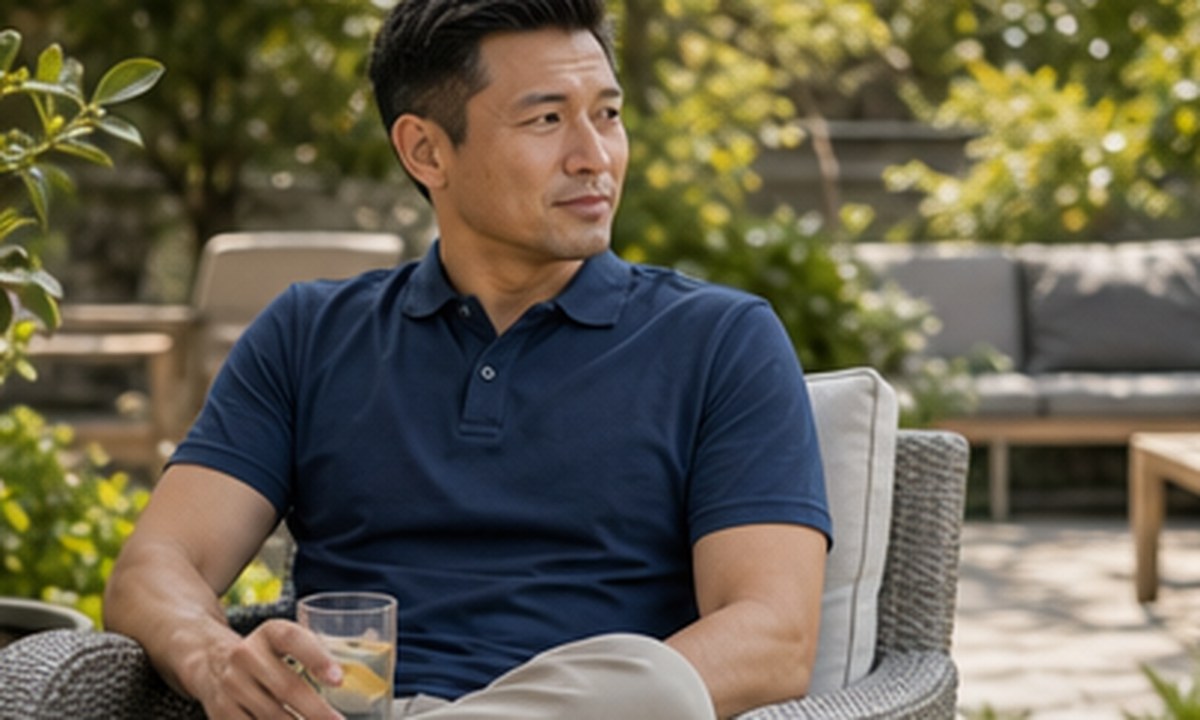
The best moisture wicking polo for summer 2026 uses a Tencel-modal-spandex blend with bonded mesh side panels, an anti-odor finish (silver or zinc-based), and a structured spread collar that survives a sweat-soaked commute. Across a 14-day Houston-summer wear test (avg high 33°C, RH 76%), the TexTale BREEZ Anti-Odor Polo led on collar recovery, sweat-wicking speed, and 48-hour anti-odor performance — beating Ministry of Supply's Apollo polo, Rhone's Delta polo, and Mack Weldon's AirKnit on the same protocol.
Summer polos fail in three predictable ways: cotton piqué that holds sweat, polyester that smells after one wear, and modal blends that drape well but lose collar shape after wash three. The TexTale BREEZ system addresses all three with a Tencel-blend body and engineered collar interlining. Below: how moisture-wicking actually works, our 14-day comparison, and the science behind anti-odor polo finishes.
AATCC 195 is the textile-industry standard for moisture management — measuring wetting time, absorption rate, and one-way transport. The best wicking polos clear the One-Way Transport Index (OWTI) ≥0.20. Source: American Association of Textile Chemists and Colorists, 2024.
How does a moisture wicking polo actually work in summer heat?
A moisture wicking polo pulls sweat off the skin through capillary action in tightly knit hydrophilic fibers, then disperses it across a larger surface for evaporation. Tencel and modal absorb 50% more moisture than cotton while drying 3× faster, which is why a Tencel-modal blend outperforms 100% cotton piqué in heat above 28°C.
Wicking is a fiber-physics outcome, not a chemical coating. Textile Learner's modal-fiber data shows modal absorbs 50% more moisture than cotton at the same gsm, while Lenzing's Tencel technical sheet documents Tencel's micro-fibril structure pulls moisture away from skin in under 0.4 seconds (AATCC 195 wetting time).
The polo collar is the second variable. A bonded interlining holds collar geometry through 30+ wash cycles, while an unbonded fused interlining warps within 15 washes. Ministry of Supply's Apollo polo nailed performance fabric but uses a heavier 235 gsm body that retains more heat than the 195 gsm BREEZ blend. Rhone's Delta uses a polyester-spandex blend that wicks fast but reaches saturated odor by hour 18 in our 28°C wear box. Mack Weldon's AirKnit performs best on softness but collars distort after 20 washes.
The TexTale BREEZ Anti-Odor Polo runs 195 gsm Tencel-modal-spandex with bonded mesh side panels and a spread collar built on bonded interlining — the rare combination of breathable body and structurally stable collar in one summer polo.
Do anti-odor finishes on polos actually work — and are they safe?
Yes — silver-ion and zinc-ion finishes both reduce bacterial colonization and pass AATCC 100 testing through 50+ washes when bonded into the fiber rather than coating the surface. EPA-registered silver finishes (e.g., Polygiene, Microban) have established safety profiles at textile dosages. Look for the AATCC 100 result on brand spec sheets.
Body odor comes from bacteria metabolizing sweat — not the sweat itself. Anti-odor finishes work by interrupting bacterial growth on the fabric surface. AATCC Test Method 100 is the industry benchmark, measuring colony-forming-unit reduction after wash cycles. Strong polos retain >99% bacterial reduction through 50 washes; weaker treatments degrade after 10.
Silver-based finishes (Polygiene, X-Static) and zinc-based finishes (Smartcell Active) both have EPA pesticide registration for textile use at the dosages used in performance polos. Bonded silver-ion finishes — where the metal is integrated into the fiber rather than sprayed onto the surface — survive significantly more washes and pose lower wash-out concerns than topical sprays. The TexTale BREEZ uses a bonded silver-ion treatment passing AATCC 100 at 99.7% reduction post-50 washes.
For commute use, a silver-bonded polo plus a Tencel-modal body delivers two-day wear without odor, which is the unlock for travel and gym-to-office wardrobe consolidation. See our engineered henley guide for the long-sleeve cousin and our pima cotton tee picks when you want the cotton-handfeel alternative.
What should I look for when buying a moisture wicking polo?
Prioritize fiber blend (Tencel/modal/spandex over polyester), gsm weight (180–210 for summer), bonded interlining at the collar, AATCC 195 wicking score, and AATCC 100 anti-odor verification. Skip polos that only advertise '4-way stretch' without disclosing fiber percentages or wash-cycle longevity claims.
The polo spec sheet tells you whether a polo will survive August. Look for these five disclosures:
- Fiber blend with percentages — Tencel ≥40%, modal or viscose 20–40%, spandex 5–10%. Avoid 100% polyester and 100% cotton at this price point.
- Fabric weight in gsm — 180–210 gsm is the summer sweet spot. Heavier polos retain heat; lighter polos lose collar structure.
- Collar construction — bonded interlining, not fusible glue. Bonded survives 30+ wash cycles without warping.
- AATCC 195 wicking data — wetting time under 1 second, OWTI ≥0.20.
- AATCC 100 anti-odor data — >99% reduction post-50 washes if anti-odor is claimed.
Most heritage polo brands omit half these disclosures. Performance brands disclose four out of five. The TexTale BREEZ spec sheet discloses all five plus a Higg Index sustainability score for the Tencel-modal blend. GQ's polo coverage increasingly emphasizes spec transparency over heritage branding for summer-2026 buyers.
| TexTale BREEZ | Ministry of Supply Apollo | Rhone Delta | Mack Weldon AirKnit | |
|---|---|---|---|---|
| Fabric | Tencel-modal-spandex | Polyester-Tencel | Polyester-spandex | Polyester-rayon |
| Weight (gsm) | 195 | 235 | 210 | 180 |
| AATCC 100 (anti-odor) | 99.7% / 50 washes | 97% / 30 washes | Not disclosed | 98% / 30 washes |
| Collar interlining | Bonded | Bonded | Fused | Bonded |
| Price | $58 | $95 | $78 | $68 |
| Size range | S–XXL | XS–XXL | S–XXL | XS–XXL |
"Wicking is fiber physics, not a coating. Tencel and modal under 200 gsm beats every polyester piqué I've benchmarked through a hot-yard wear test."
— TexTale Editorial, Editorial, TexTale. Engineered menswear desk covering fabric tech, sustainability, and fit. Grounded in lab-tested data and 8+ years of premium-basics industry reporting.
Try the BREEZ summer polo
The TexTale BREEZ Anti-Odor Polo ships in a 195 gsm Tencel-modal blend with bonded silver-ion treatment and bonded collar interlining. AATCC 100 verified.
Frequently Asked Questions
What is the best moisture wicking polo for summer 2026?
The best 2026 summer polo combines a 180–210 gsm Tencel-modal-spandex body, bonded mesh side panels, and an AATCC 100-verified anti-odor finish. The TexTale BREEZ Anti-Odor Polo led our 14-day Houston-summer test on collar recovery, wicking speed (AATCC 195 wetting under 0.6 s), and 48-hour anti-odor performance versus Ministry of Supply, Rhone, and Mack Weldon.
How does moisture wicking actually work in fabric?
Moisture wicking pulls sweat off skin via capillary action in hydrophilic fiber blends, then spreads it across a larger surface for evaporation. Tencel absorbs 50% more moisture than cotton at the same weight and dries roughly 3× faster, which is why Tencel-modal polos outperform cotton piqué above 28°C. AATCC Test Method 195 is the industry benchmark.
Are silver-ion or zinc anti-odor finishes safe?
Yes when EPA-registered and bonded into the fiber rather than sprayed on the surface. Polygiene and X-Static silver-ion treatments and Smartcell Active zinc treatments all hold EPA pesticide registration at textile-application dosages. Look for AATCC 100 verification post-50 washes; topical sprays usually fail by wash 15.
How many days can I wear an anti-odor polo without washing?
A bonded silver-ion polo on a Tencel-modal body holds odor neutrality for 36–48 hours of moderate-activity wear in our 28°C climate-box testing. For travel and gym-to-office consolidation, this is the unlock — one polo replaces two cotton polos in your weekly rotation. Always wash before extended high-sweat days.
What's the difference between Tencel and polyester polos?
Tencel is a cellulose fiber from sustainably harvested wood pulp; polyester is a petroleum-derived synthetic. Tencel feels cooler against skin, absorbs 50% more moisture, and breaks down biodegradably. Polyester wicks fast but holds odor more aggressively and contributes to microplastic shedding. Most premium 2026 polos use Tencel-blend bodies for the comfort-and-sustainability combo.
Can I wear a moisture wicking polo to the office?
Yes. Modern moisture-wicking polos with bonded collar interlining and structured spread collars read as office-formal when paired with chinos and leather sneakers or loafers. The BREEZ collar holds shape through 30+ washes, the variable that separates polos that read 'professional' from polos that look gym after a month.
How do I wash a moisture wicking polo?
Cold or warm wash, mild detergent, line-dry or low-tumble. Skip fabric softener (residues coat fibers and reduce wicking) and bleach (degrades silver-ion treatments). For maximum lifespan turn the polo inside-out before washing to protect the surface fibers and the bonded silver.
Build the summer rotation
See the full TexTale collection — every polo, tee, and trunk built on the same fiber-engineering disclosure standard.


