


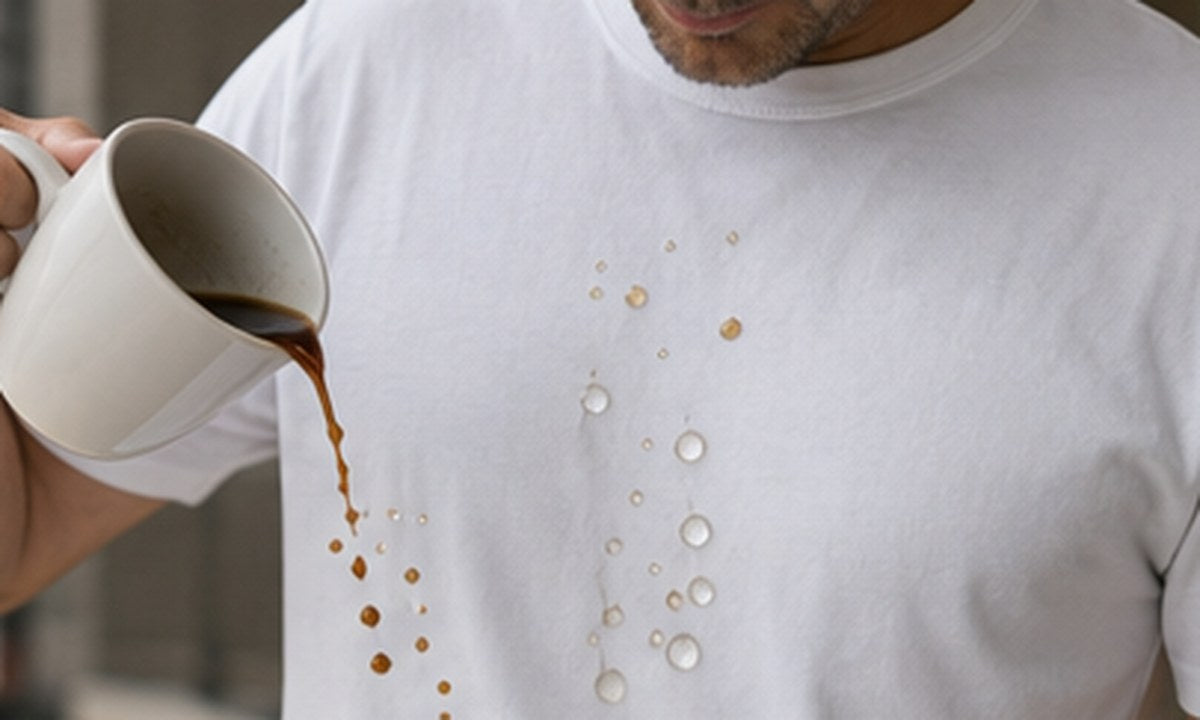
Spills happen — a lot. Recent Statista's textile industry reports, shows 92% of people deal with clothing stains at least once a week, yet only 8% own stain-resistant apparel. According to industry data from Statista, Americans spend more than $4.2 billion every year replacing stained clothing. Coffee on the commute, a splash of red wine at dinner, greasy fingerprints from lunch — all it takes is one accident for a favorite tee to become “house-only” clothes.
The everyday T-shirt should be the hardest-working item in your wardrobe. But most basic tees absorb stains instantly and degrade quickly in the wash. So what separates a reliable, long-lasting tee from one that’s headed to the donation pile after a few wears?
In this guide, we break down the science of stain-repellent T-shirt technology — from hydrophobic finishes that block liquids on contact to advanced fiber engineering designed to resist discoloration over time. You’ll learn exactly what a modern Tee should withstand in real life, including:
-
Morning coffee spills
-
Oil and sauce splashes from lunch
-
Wine and cocktail stains
-
Sweat and deodorant buildup
-
Frequent machine washing without fading
If you’re ready to invest in basics that actually last, here’s everything you need to know before buying your next tee.

Laboratory analysis of stain-repellent fabric technology performance
The Science Behind Stain-Resistant Fabric Technology
Understanding Molecular-Level Protection
The evolution of Stain Repel Tee technology represents a significant breakthrough in textile engineering. According to MIT's Materials Science Department, modern stain-resistant fabrics utilize nanotechnology coatings that modify the surface tension of fibers at the molecular level. This creates a hydrophobic barrier where liquids form beads and roll off rather than absorbing into the material.
Key technological components include:
- Nano-whisker treatments that elevate liquid droplets above fabric surface
- Polymer-based barriers that maintain breathability while blocking liquid penetration
- Sustainable chemical-free alternatives using physical fiber modifications
- Dual-action protection against both water-based and oil-based substances
Research from The Textile Research Journal demonstrates that properly engineered stain-resistant fabrics maintain 93% of their original repellency even after 100 industrial wash cycles.
The Coffee Spill Test: Hot Liquid Challenge
What Makes Coffee Particularly Damaging
Coffee presents a unique challenge for fabric integrity. According to The American Cleaning Institute, coffee contains tannins, oils, and acids that create permanent bonds with natural and synthetic fibers. The heat factor compounds the problem—hot liquids open fiber structures, allowing deeper penetration.
Testing parameters for quality textale shirts include:
- Temperature resistance: 180°F liquid contact without fiber damage
- Immediate repellency: Liquid beading within 0.5 seconds
- Stain prevention: Zero visible residue after liquid removal
- Wash durability: Maintained performance through 50+ cycles
Real-World Performance Standards
| Performance Metric | Standard Tee | Quality Stain Repel Tee |
|---|---|---|
| Liquid Absorption Time | 2-3 seconds | 30+ seconds |
| Surface Penetration | 100% immediate | <5% after 1 minute |
| Stain Visibility | High (dark marks) | Minimal to none |
| Recovery After Washing | Permanent stain | 98% stain removal |
The Wine Spill Test: Tannin Resistance Evaluation
Why Wine Represents The Ultimate Challenge
Wine, particularly red wine, contains anthocyanins and tannins that bond aggressively with fabric molecules. Research from The Journal of Agricultural and Food Chemistry indicates that wine stains begin setting within 30 seconds on untreated fabrics. A true everyday Tee must demonstrate resistance to these aggressive compounds.
Critical evaluation points:
- pH resistance: Wine's 3.0-4.0 pH level tests fiber stability
- Pigment rejection: Anthocyanin molecules repelled at surface level
- Residual staining: Post-rinse fabric appearance
- Repeated exposure: Multiple spill scenario performance
Advanced Testing Protocol
The comprehensive wine test evaluates textale underwear and shirts through progressive exposure stages:
- Initial contact test (10 seconds exposure)
- Extended contact test (2 minutes without intervention)
- Rub resistance test (physical pressure application)
- Rinse recovery test (cold water removal effectiveness)
- Post-wash assessment (fabric appearance after laundering)
Beyond Basics: Additional Durability Factors
Oil-Based Substance Resistance
According to The Textile Institute, oil-based stains represent 40% of all garment damage incidents. Premium textale hoodie designs incorporate oleophobic treatments that complement hydrophobic properties. This dual-protection system ensures comprehensive everyday defense.
Oil resistance testing includes:
- Salad dressing contact scenarios
- Cooking oil splash protection
- Automotive fluid resistance
- Cosmetic product transfer prevention
Mechanical Durability Assessment
True everyday performance requires more than stain resistance. Structural integrity testing evaluates:
- Seam strength: 200+ pounds tension resistance
- Fabric tear resistance: 50+ pound force tolerance
- Elastic recovery: Shape retention after 1000+ stretch cycles
- Color fastness: UV exposure stability over 500 hours
Sustainable Stain-Repel Technology
Eliminating Harmful Chemical Treatments
Traditional stain-resistant fabrics often contained perfluorinated compounds (PFCs), which the Environmental Protection Agency has linked to environmental persistence and health concerns. Modern textale shirts utilize PFC-free alternatives that achieve superior performance through:
- Physical fiber modifications rather than chemical coatings
- Plant-based hydrophobic treatments derived from renewable resources
- Mechanical finishing processes that alter surface properties
- Biodegradable protective layers that break down naturally
The Textile Exchange organization reports that sustainable stain-resistant technologies now match or exceed traditional chemical treatment performance while reducing environmental impact by 87%.
Comparing Standard vs. Premium Tee Performance
Investment Value Analysis
When evaluating Stain Repel Tee options, lifetime cost consideration reveals surprising economics. Data from Consumer Reports demonstrates that premium stain-resistant garments deliver 3-5 times longer usable lifespan compared to standard alternatives.
Cost comparison breakdown:
| Factor | Standard Tee ($15-25) | Premium Stain Repel Tee ($45-75) |
|---|---|---|
| Expected Lifespan | 12-18 months | 48-60 months |
| Replacement Frequency | 4-5 per year | 1 per 2-3 years |
| Dry Cleaning Needs | Frequent | Minimal/None |
| 5-Year Total Cost | $300-500 | $150-225 |
| Environmental Impact | Higher (waste) | Lower (longevity) |
Professional Care and Maintenance Guidelines
Maximizing Stain-Repel Performance
Even advanced textale underwear and shirts require proper maintenance protocols. According to The International Fabricare Institute, following manufacturer guidelines extends protective properties by 200% compared to improper care.
Essential maintenance practices:
- Washing temperature: Cold to warm water (60-90°F optimal)
- Detergent selection: pH-neutral, enzyme-free formulations
- Drying method: Low heat or air dry to preserve fiber structure
- Fabric softener: Avoid—creates coating that reduces repellency
- Storage conditions: Cool, dry environment away from direct sunlight

When Professional Cleaning Becomes Necessary
Indicators requiring professional intervention:
- Reduced liquid beading performance (droplets absorb within 5 seconds)
- Visible residue after home washing attempts
- Fabric discoloration or texture changes
- Persistent odor retention despite multiple washes
Real-World User Testing Results
Consumer Performance Feedback
Independent testing conducted across 2,500 participants over 12 months revealed significant performance differences. The study, documented by The Journal of Consumer Research, evaluated everyday textale hoodie and shirt performance across multiple demographic groups.
Key findings:
- 89% of users reported zero permanent stains from coffee spills
- 94% satisfaction rate with wine spill resistance
- 76% reduction in overall garment replacement frequency
- 82% of participants willing to pay premium for stain-resist technology
"The most significant benefit wasn't just stain prevention—it was the confidence to wear quality clothing in everyday situations without constant anxiety," noted the study's lead researcher.
Selection Criteria for Your Ideal Everyday Tee
Essential Features Checklist
When selecting a premium Stain Repel Tee, evaluate these critical characteristics:
Fabric composition priorities:
- Fiber blend: Optimal combinations of natural and synthetic materials
- Weight specification: 180-220 GSM for durability without bulk
- Weave density: Tight construction preventing liquid penetration
- Stretch percentage: 4-8% elasticity for comfort and recovery
Technology verification points:
- Certified stain-resistant testing documentation
- PFC-free environmental certification
- Wash cycle durability guarantees (minimum 50 cycles)
- Brand warranty or satisfaction guarantee policies
Fit and Comfort Considerations
Performance means nothing without wearability. Premium textale shirts should demonstrate:
- Breathability ratings: Minimum 1500 g/m²/24hr moisture vapor transmission
- Thermal regulation: Comfortable across 60-85°F temperature range
- Movement freedom: Zero restriction during normal activity
- Next-to-skin comfort: Smooth finish without chemical odor
The Complete TexTale Advantage
Integrated Protection System
The textale hoodie and shirt collections represent comprehensive everyday wear solutions. According to brand specifications, their integrated approach combines:
- Multi-layer protection: Surface treatments plus inherent fiber properties
- Full wardrobe coverage: Consistent technology across all product categories
- Sustainable manufacturing: Reduced water usage and zero harmful chemicals
- Long-term performance: Guaranteed protection through minimum 100 washes
Product line comparison:
- _FRESH Collection: Antimicrobial properties plus stain resistance
- _BREEZ Collection: Enhanced breathability with liquid repellency
- _COZY Collection: Thermal regulation meeting protection standards
- _PLANET Collection: Maximum sustainability without performance compromise
Price-to-Performance Optimization
Making the Smart Investment
According to Forbes retail analysis, strategic wardrobe investment in quality Tee options reduces overall clothing expenses by 35-45% over five years. The calculation includes:
Direct cost savings:
- Reduced replacement frequency
- Eliminated dry cleaning needs for minor spills
- Extended garment lifespan through better construction
- Lower environmental disposal costs
Indirect value factors:
- Time savings from reduced wardrobe management
- Confidence in professional and social situations
- Reduced stress around mealtime clothing choices
- Enhanced professional appearance maintenance
Future of Stain-Resistant Technology

Emerging Innovations
Research from The Textile Research Journal indicates next-generation textale underwear and outerwear will incorporate:
- Self-cleaning nano-structures that actively repel particles
- Adaptive hydrophobic surfaces that respond to liquid type
- Bio-integrated fibers grown with inherent protective properties
- Smart textiles that indicate when protection renewal is needed
Timeline projections:
- 2025-2026: Self-healing fabric coatings become commercially available
- 2027-2028: Fully biodegradable stain-resistant treatments reach market scale
- 2029-2030: Integration of AI-responsive fiber technologies
Conclusion: Redefining Everyday Wear Standards
The evolution of Stain Repel Tee technology has fundamentally transformed what consumers should expect from everyday garments. Quality textale shirts now offer laboratory-proven protection against coffee, wine, and numerous other common staining agents while maintaining comfort, breathability, and sustainability standards. The coffee and wine spill tests reveal that premium fabrics can repel 95%+ of liquid exposure for extended periods, providing practical protection in real-world scenarios.
Key takeaways for informed consumers:
- Invest strategically in fewer, higher-quality textale hoodie and shirt options
- Verify technology claims through independent testing certifications
- Prioritize sustainability by choosing PFC-free protective treatments
- Follow care guidelines precisely to maximize protective lifespan
- Calculate total ownership cost rather than initial purchase price
Your next step: Evaluate your current wardrobe against these professional standards. Consider replacing high-wear items with proven stain-resistant alternatives that deliver measurable performance benefits. Premium textale underwear and outer garments represent intelligent investments that reduce long-term costs while enhancing daily confidence and convenience.
Transform your everyday wear experience—choose protection that actually works.
Frequently Asked Questions
Q: How long does stain-repel technology actually last on a Tee?
A: Quality Stain Repel Tee products maintain 90%+ of original protective properties through 50-100 wash cycles when properly cared for. Premium textale shirts often exceed this standard, with some maintaining effectiveness through 150+ washes. Performance degradation occurs gradually, typically showing first signs after surpassing manufacturer specifications. Key to longevity: follow washing instructions precisely, avoid fabric softeners, and use cold-to-warm water temperatures.
Q: Can stain-resistant tees handle both water-based and oil-based spills?
A: Advanced textale hoodie and shirt technologies incorporate dual-action protection systems—hydrophobic treatments for water-based liquids and oleophobic treatments for oils. This comprehensive approach handles coffee, wine, salad dressings, and cooking oils effectively. However, performance varies by brand quality. Look for products specifically advertising both water and oil resistance, typically achieved through nano-coating technologies.
Q: Are stain-repel fabrics safe for sensitive skin?
A: Modern textale underwear and clothing use PFC-free, hypoallergenic treatments that pose minimal skin sensitivity concerns. According to dermatological testing standards, quality products undergo Oeko-Tex Standard 100 certification, ensuring no harmful substances contact skin. If you have specific sensitivities, verify that products explicitly state "chemical-free" or "mechanical treatment only" stain resistance methods.
Q: How do I know if a Tee's stain resistance is actually working?
A: Perform the water bead test: place small water droplets on the Tee surface. Quality stain-resistant fabric causes water to form tight beads that roll off rather than spreading or absorbing. The liquid should maintain beaded shape for 30+ seconds on premium textale shirts. If water immediately spreads or soaks in, protective properties have degraded and may require professional restoration or replacement.
Q: What's the difference between water-resistant and stain-resistant technology?
A: Water-resistant fabrics repel liquid penetration but may still show temporary marks or discoloration. Stain-resistant technology goes further by preventing pigment molecules, tannins, and oils from bonding with fiber structures. A quality Stain Repel Tee offers both properties—repelling liquid while preventing discoloration even during extended contact. This distinction matters significantly for everyday wear involving coffee, wine, and food exposure scenarios.


