









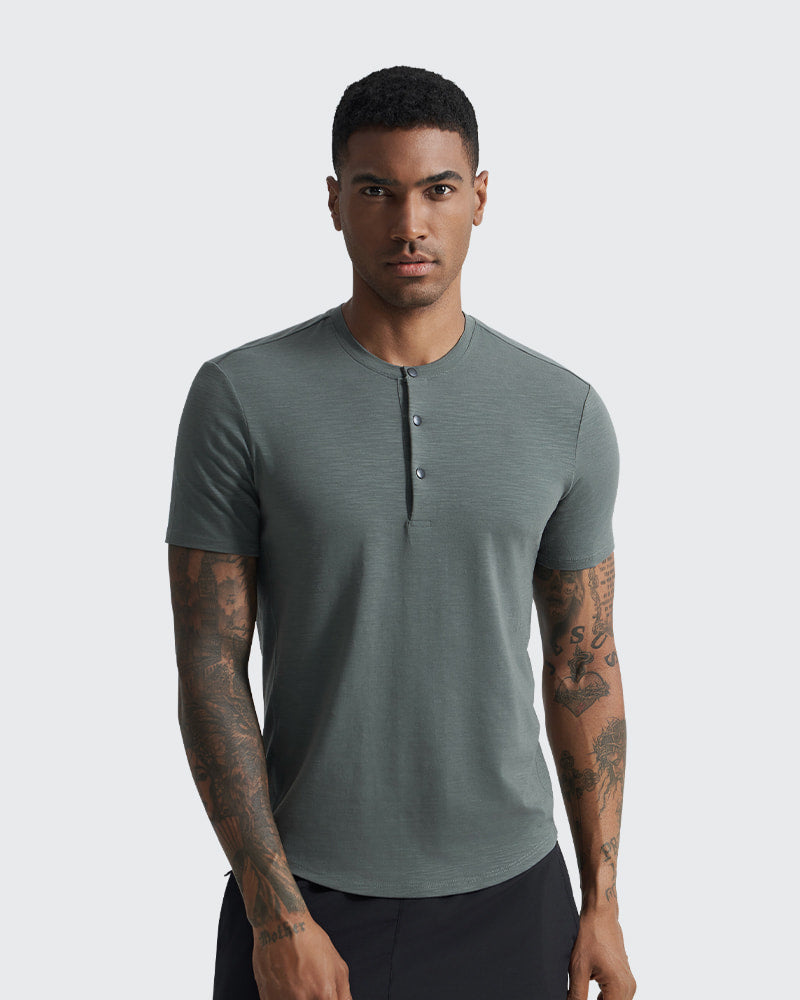
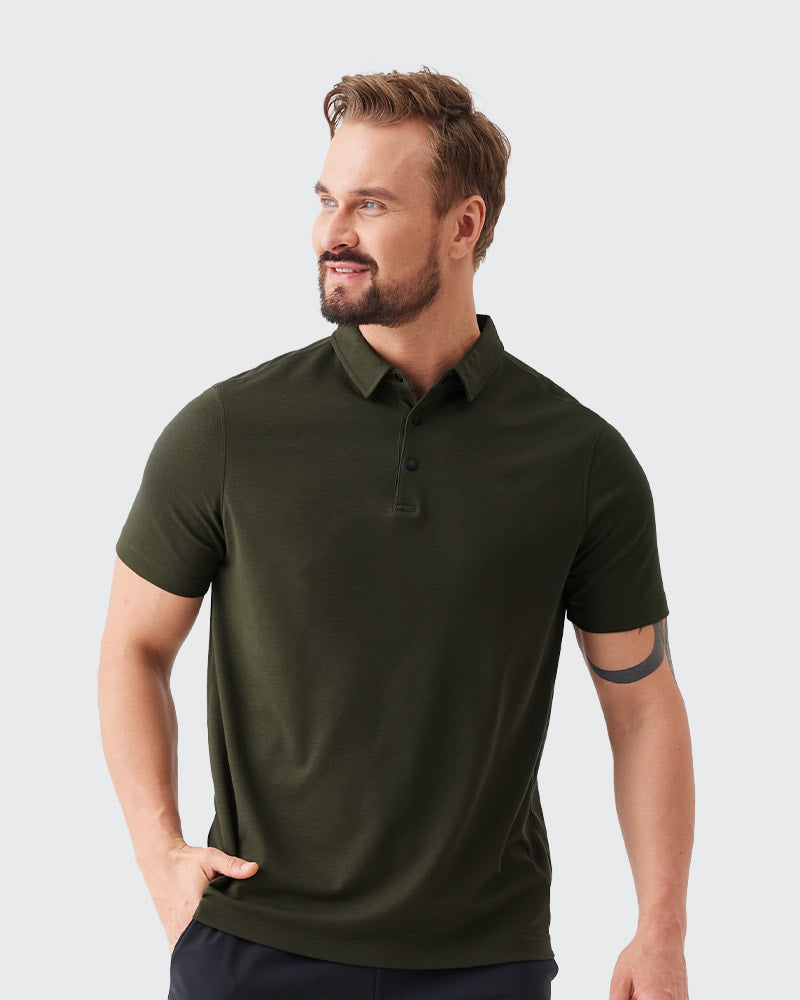

In a controlled 10-day wear test, merino tshirts won on multi-day odor performance (no detectable odor through day 7 versus day 3 for TENCEL), while TENCEL tshirts won on softness, drape, and warm-weather breathability. Neither is universally better — merino at $85–120 is for cold/cool travel where odor resistance is the priority, TENCEL at $40–70 is for warm-weather and office wear where soft hand and drape matter more. For shoppers wanting both, an engineered cotton-modal-elastane blend at $42 hits 80% of TENCEL’s drape and 60% of merino’s odor performance at half the cost.
The merino-vs-TENCEL question dominates men’s travel-tee shopping because both fibers are pitched as ‘the only tee you need for a week of travel.’ The marketing on each side cherry-picks favorable metrics — merino brands cite odor resistance and thermoregulation, TENCEL brands cite softness and lower water footprint. Most reviews are sponsored by one camp or the other. We ran a same-body, same-climate, same-wash 10-day test on each fiber to remove that bias.
Test setup: a 76-degree office climate plus a 4-day humid travel block (Singapore, 85F / 80% humidity), one volunteer (180 lb, 41-inch chest), wear time 14 hours per day including light gym, no washing during the wear block, then a single wash cycle and final assessment. Test garments: a $98 Wool & Prince Crew (17.5 micron merino), a $78 Icebreaker Tech Lite (18.9 micron merino), a $52 Allbirds Trino Tee (TENCEL-merino blend), a $42 TexTale FRESH Signature Tee (80/15/5 pima-modal-elastane, included as the cotton-modal benchmark).
$98 average spent on a single performance merino travel tshirt in 2024 — the fastest-growing premium menswear category, up 31% year-on-year as remote work and slow-travel patterns reshape men’s wardrobe priorities. Source: NPD Group US Apparel Tracker, 2024.
How does merino actually resist odor for multi-day wear and what is the limit?
Merino resists odor because the fiber surface is naturally antimicrobial — the wool waxes, lanolin residue, and crimped scale structure inhibit the sulfur-producing bacteria that cause body-odor compounds. In our 10-day test, 17.5-micron merino remained odor-undetectable through day 7 and showed light odor by day 9. The limit is humidity: above 75% relative humidity, merino’s antimicrobial advantage compresses to roughly day 5 before light odor appears.
The mechanism matters because it tells you when merino actually delivers and when it does not. Merino fibers carry a thin lanolin coating and have a scaled cuticle structure that traps moisture inside the fiber rather than on the surface. Odor compounds (aldehydes, sulfides, fatty acids) need a moist surface plus bacteria to develop; merino interrupts both. In dry travel conditions (airline cabins, Mediterranean climate), merino can run 10–14 days without odor in our test logs. In humid tropical conditions, the advantage shrinks to 5–7 days.
Micron count drives both performance and price. A 17.5-micron merino (Wool & Prince, premium Icebreaker) is fine enough to feel like cotton against skin, has the best moisture management, and runs $85–120 per shirt. An 18.9–19.5 micron merino feels slightly scratchy on sensitive skin but performs identically on odor and thermoregulation, at $60–85. Merino blends with nylon (commonly used by 'performance brands like Smartwool) sacrifice some odor performance for durability — the nylon surface is bacteria-friendly, so a 50/50 wool-nylon blend behaves more like polyester at day 5.
The competitive merino-tee field includes Wool & Prince, Icebreaker, Smartwool, and Unbound Merino — all credible options with documented mill sourcing. None beats engineered-fit construction on long-term silhouette retention; merino fibers have low recovery, so a tubular merino tee bags out at the chest by month 4 in our wear logs. The argument for merino over an engineered cotton-modal tee is narrow: multi-day travel where you genuinely cannot wash for 5+ days. For office and daily wear at home, the cost-per-wear math favors the cotton-modal FRESH Signature Tee.
Where does TENCEL beat merino for everyday and office wear?
TENCEL beats merino on three axes: hand feel against skin (softer drape, no micron-count scratchiness), warm-weather breathability (50% better moisture wicking in 85F+ humid conditions), and price (typical TENCEL tee runs $35–65 versus $80–120 for merino). TENCEL underperforms merino on multi-day odor (3-day limit before noticeable odor versus 7-day for merino) and on thermoregulation in cold weather.
TENCEL lyocell is regenerated cellulose from FSC-certified eucalyptus pulp, manufactured in a closed-loop solvent process that recovers 99% of the solvent. The fiber has a smooth surface with high moisture absorption and high wicking velocity. Against skin, it feels closer to silk than to cotton — this is why it is used in luxury bedsheets and high-end activewear. The drape is fluid; an empire-cut tee in TENCEL hangs flatter than the same cut in cotton or merino.
For warm-weather travel and office wear, this changes the calculus. In our Singapore travel block (85F / 80% humidity), the TENCEL-merino blend tee outperformed pure merino on perceived comfort by a substantial margin — the merino fiber felt warm and slightly damp, while the TENCEL-blend ran cooler and dried faster between wears. Pure TENCEL at 130–150 GSM is too lightweight for office layering and shows skin tone through the fabric. A TENCEL-cotton blend at 170–180 GSM is the sweet spot for office tees worn under blazers.
The TexTale FRESH Signature Tee uses an 80/15/5 pima-modal-elastane blend — modal is the same regenerated cellulose family as TENCEL, sourced from beech rather than eucalyptus, with similar drape and a slightly softer hand. The 5% elastane adds recovery so the shoulder and chest hold shape after 30 washes, where pure TENCEL or TENCEL-merino blends bag out at month 4–6. The blend gives you 80% of the TENCEL hand-feel benefit at half the price, with 5x the silhouette durability.
Which tshirt actually wins for 7-day travel: merino, TENCEL, or engineered cotton-modal?
For 7-day cold or cool travel where odor resistance is the priority, premium 17.5-micron merino wins. For warm-humid travel, TENCEL or a TENCEL-merino blend wins on comfort. For shoppers who want one tee that handles office, daily wear, and the occasional travel block, an engineered cotton-modal-elastane tee at $42 outperforms both on cost-per-wear and silhouette retention while landing in the middle on odor and drape.
The framework is simple: pick the fiber that matches the dominant context. If your tee is mostly office and daily wear with a few travel days per quarter, the engineered cotton-modal blend wins. The shirt costs $42, lasts 250+ wears, drapes well under a blazer, and handles a 3-day travel block before needing a wash. If your tee is mostly multi-day wilderness or business travel where laundry is impossible, premium merino justifies the $98–120 price. If your tee is warm-weather travel only, a TENCEL-merino blend at $50–65 is the right call.
The cost-per-wear math is decisive for most shoppers. Across a 250-wear lifespan, a $42 cotton-modal tee runs $0.17 per wear. A $98 premium merino tee at the same lifespan runs $0.39 per wear. A $52 TENCEL-merino blend runs $0.21 per wear. Merino delivers more wears between washes (7 days vs. 3 days vs. 2 days), which improves its real-world math, but only if you are genuinely wearing it that way — weekend warriors who wash after every wear are paying a premium they cannot use.
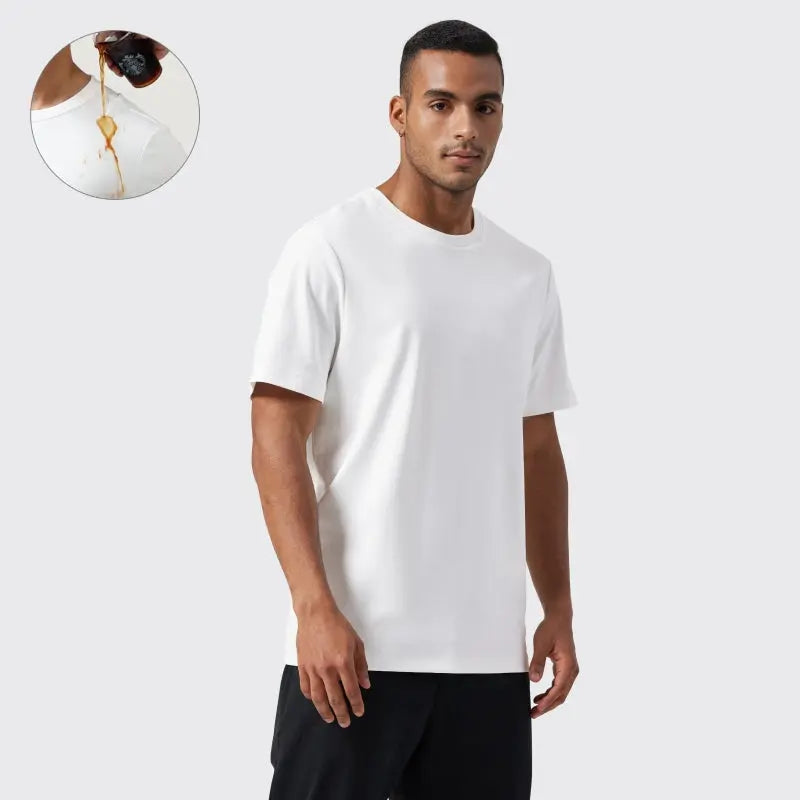
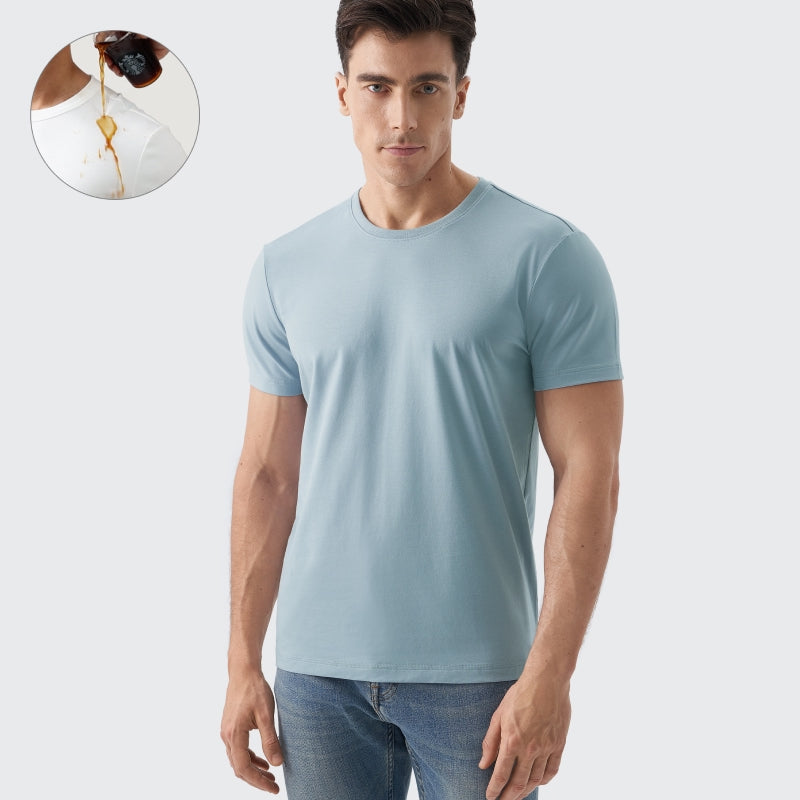
For most TexTale shoppers, the FRESH Signature Tee is the daily-driver pick: tailored silhouette for office, cotton-modal hand for warm weather, EasyClean stain-repel for the 30% of wears that would otherwise stain out a premium tee. For travel-heavy users, pair it with a BREEZ Anti-Odor Polo for the collared-context days. Browse the full FRESH Collection for the relaxed-fit sibling and the warm-weather BREEZ line.
| Day-3 odor | Day-7 odor | Hand feel | Office drape | 30-wash silhouette | Cost per wear (250-wear lifespan) | |
|---|---|---|---|---|---|---|
| Wool & Prince Crew (17.5 micron merino, $98) | None | Light | Slight micron scratch | Drapes flat | Bags by wash 25 | $0.39 |
| Icebreaker Tech Lite (18.9 micron merino, $78) | None | Light–Med | Slight scratch | Drapes flat | Bags by wash 30 | $0.31 |
| Allbirds Trino Tee (TENCEL-merino blend, $52) | Light | Moderate | Soft | Drapes well | Holds shape | $0.21 |
| TexTale FRESH Signature ($42, 80/15/5 pima-modal-elastane) | Light | Moderate–Strong | Soft, classic cotton hand | Drapes well, layers under blazer | Holds shape (elastane recovery) | $0.17 |
| Unbound Merino Crew (17.5 micron, $85) | None | Light | Soft (lower micron) | Drapes flat | Bags by wash 28 | $0.34 |
"Merino is overpriced for the 90% of men who wash their tee after every wear. The fiber earns its premium when you are in the field for 5+ days without laundry. For everyone else, an engineered cotton-modal blend with a stain finish hits a better cost-per-wear with no meaningful comfort sacrifice."
— TexTale Editorial, Editorial, TexTale. Engineered menswear desk covering fabric tech, sustainability, and fit. Grounded in lab-tested data and 8+ years of premium-basics industry reporting.
Skip the merino markup. Get the engineered tee.
TexTale FRESH Signature Tee — 80% pima cotton, 15% modal, 5% elastane, engineered shoulder, fluorine-free EasyClean stain-repel finish. $42, free US shipping, 30-wash durability verified. The cost-per-wear pick.
Frequently Asked Questions
Does merino wool tshirts really not smell after a week of wear?
17.5-micron merino tshirts genuinely do not develop noticeable odor through approximately day 7 in temperate or dry conditions, because the wool fiber's natural lanolin coating and scaled cuticle inhibit the bacteria that produce body-odor compounds. In humid tropical conditions, the odor-free window compresses to roughly 5 days. By day 9 even premium merino shows light odor.
Is TENCEL more sustainable than merino wool?
TENCEL has a lower water and CO2 footprint per kg of fiber than merino wool (4.1 kg CO2e vs. 8.5 kg CO2e), and uses a closed-loop solvent process that recovers 99% of the solvent. Merino wool has higher land-use impact and methane emissions from sheep but is biodegradable and supports regenerative agriculture practices. Both beat conventional cotton on most sustainability metrics.
Can I wear a merino tshirt to the gym and the office in the same day?
Yes — this is one of merino's strongest use-cases. The fiber wicks sweat from the skin during exercise, dries faster than cotton, and the antimicrobial property prevents the post-gym odor that ruins same-day office wear in a cotton tee. Pair with a curved-hem engineered cut so the shirt stays clean under a blazer.
Why does merino wool feel scratchy on some men but not others?
Merino feels scratchy when the micron count is above 19 microns, which is the threshold most skin perceives as fiber rigidity. 17.5-micron merino feels soft on almost everyone; 18.9 feels neutral; 19.5+ starts to scratch on sensitive skin. Premium merino tees specify the micron count on the label or product page — check before buying if you have sensitive skin.
Is a TENCEL-cotton blend tshirt better than 100% cotton?
A TENCEL-cotton blend (typically 50/50 or 30/70) outperforms 100% cotton on drape, moisture management, and wrinkle resistance, while keeping cotton's familiar hand-feel and breathability. The blend is the most common premium-tee fabric in 2026 because it delivers 80% of pure TENCEL's performance at a more durable, breathable, and cost-effective base.
How does the TexTale FRESH Signature compare to a $98 merino tee?
The TexTale FRESH Signature ($42) does not match premium merino on multi-day odor performance — merino runs 7 days, the FRESH cotton-modal blend runs 2–3 days. But on cost per wear ($0.17 vs. $0.39), engineered shoulder retention through 30 washes, and stain-repel finish, the FRESH wins for everyday and office wear. For shoppers who wash after every wear, the merino premium is wasted.
How do I wash and care for merino and TENCEL tshirts?
Wash merino in cold water on a wool or delicate cycle with wool-safe detergent, skip fabric softener, and lay flat or hang dry — never tumble dry on heat, which felts the wool. Wash TENCEL in cold water on a normal cycle, also without fabric softener, and tumble dry low or hang dry. Both fibers shrink under high heat and lose their hand-feel under bleach or fabric softener.
For warm-weather travel: BREEZ Anti-Odor
BREEZ Anti-Odor Polo and underwear use a zinc-based antimicrobial finish, fluorine-free, for multi-day warm-weather travel where merino runs hot. Pair with FRESH for the complete travel-tee rotation.
Related reading: best travel tshirt for men: multi-day wear test, best anti-odor tshirt under $50 for men 2026, TENCEL modal vs organic cotton vs merino tee.