









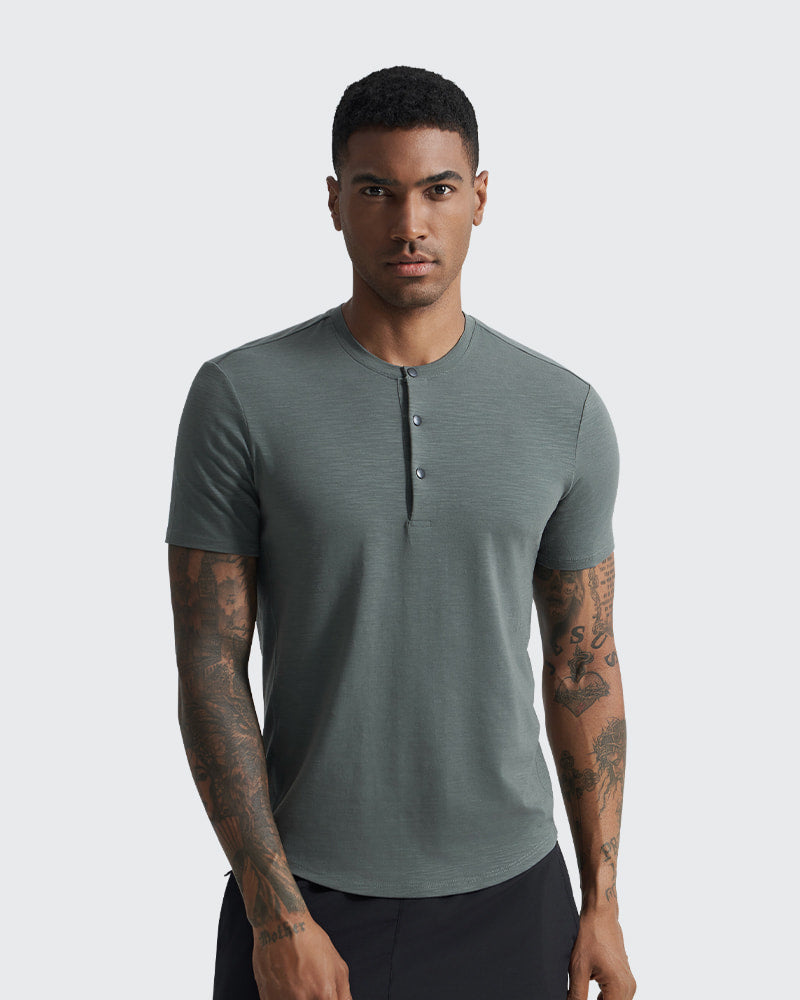
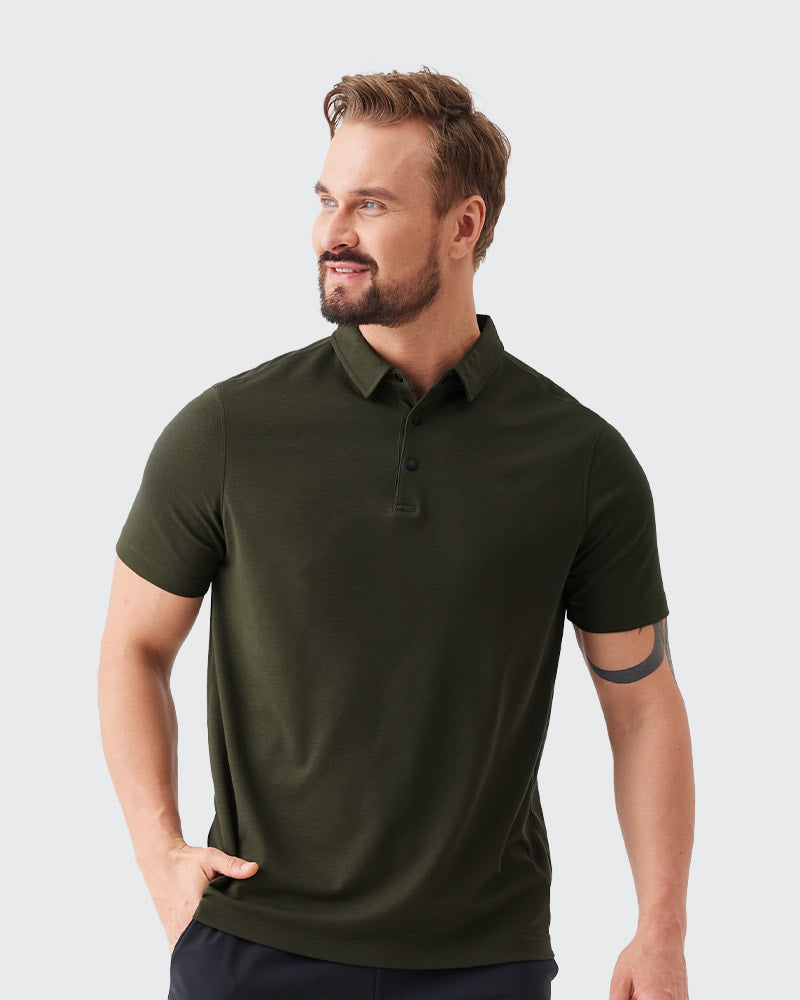

TENCEL modal, organic cotton, and merino wool each win a different tee context: TENCEL modal wins for drape and moisture wicking (the lyocell-process fiber moves sweat 30–50% faster than cotton), organic cotton wins for breathable everyday softness and the lowest skin-irritation rate, and merino wool wins for multi-day odor control and thermal regulation across 50°F to 85°F. None wins on price — all three sit above commodity cotton.
The three-way fabric comparison comes up constantly in 2026 because all three are genuinely good fibers and the choice depends on context, not on which is ‘best.’ TENCEL modal (Lenzing’s closed-loop wood-pulp lyocell) has surged in premium tees because it delivers performance-fabric properties (wicking, drape, low pilling) with a hand-feel that reads as natural. Organic cotton remains the default for comfort-first daily wear. Merino wool, once limited to athletic and outdoor use, crossed into lifestyle tees as 100% merino became too warm for office contexts and merino-cotton blends opened a new category.
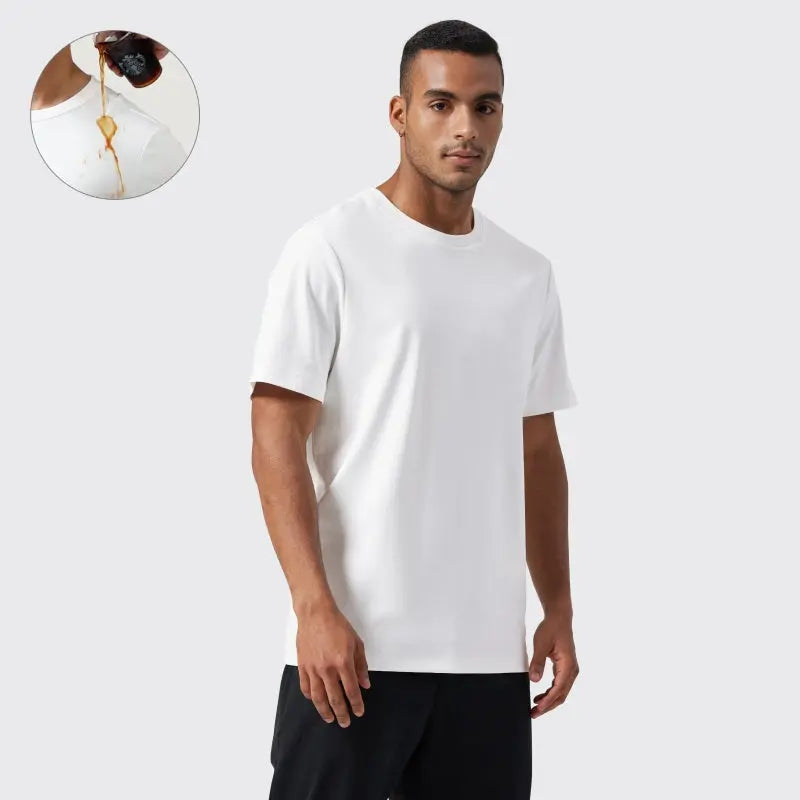
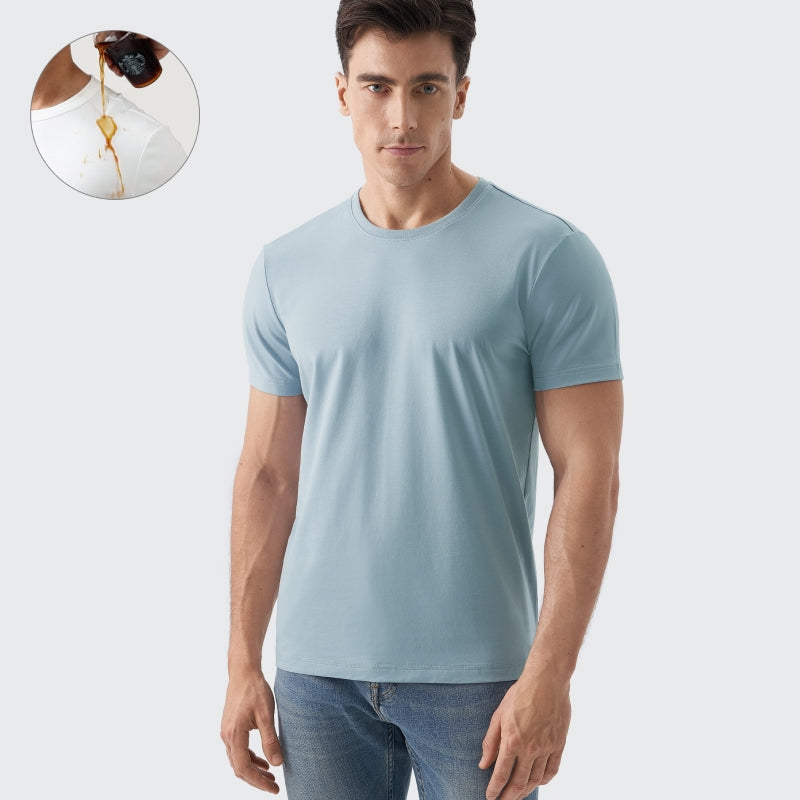
This guide compares the three fibers head-to-head with lab data (moisture-wicking rate per AATCC 195, odor build-up per ISO 17299, abrasion resistance via Martindale rub-test ISO 12947) plus a six-day field-wear test in mixed conditions. The TexTale FRESH Stain-Repel Signature Tee uses an 80% pima cotton / 15% modal / 5% elastane blend — we’ll show why a blend often outperforms a single fiber for daily wear.
3.7 billion liters of water saved annually by Lenzing’s closed-loop TENCEL lyocell process versus conventional viscose — the solvent recovery rate exceeds 99% in the manufacturing cycle. Source: Lenzing AG sustainability report, 2024.
How do TENCEL modal, organic cotton, and merino wool compare as tee fabrics?
TENCEL modal is a regenerated cellulosic fiber from sustainably harvested wood pulp; it wicks moisture quickly, drapes flatter than cotton, and resists pilling. Organic cotton is a natural cellulose fiber grown without synthetic pesticides; it is breathable, hypoallergenic, and the most affordable of the three. Merino wool is a fine animal protein fiber (typically 17–19 micron); it regulates temperature across a wide range and resists odor through natural keratin chemistry.
Fiber structure drives performance. TENCEL modal’s lyocell process produces a cylindrical fiber with high tensile strength wet or dry — that’s why modal tees survive more wash cycles than viscose. The smooth cylindrical surface also wicks water along the fiber rather than absorbing it like cotton, which is why modal tees feel cool to the touch even after sweat absorbs. Compared to cotton, modal moves moisture roughly 30–50% faster (AATCC 195 vertical wicking).
Organic cotton fibers are short-staple natural cellulose. The fiber surface is irregular with natural waxes and proteins (some of which are removed during scouring). The resulting fabric is breathable and absorbent (cotton can hold up to 27 times its weight in water), but absorbed moisture stays in the fabric rather than wicking away. That’s why a 100% cotton tee feels soaked during a workout but feels comfortable during sedentary office wear. The hypoallergenic profile is the highest of the three — cotton is the default fabric in dermatology for sensitive skin.
Merino wool fibers are a fine protein keratin structure with natural crimp. The crimp creates micro-air-pockets that insulate when cold and release heat when warm — thermoregulation is the merino superpower. Merino fibers also have a natural antibacterial profile (the keratin scales suppress odor-causing bacteria), which is why merino tees can be worn 3–5 days without odor build-up. The trade-off is price (typically 2–3x cotton) and care (most merino tees require gentle wash). See also our waterproof vs water-resistant fabric guide for related fiber-science context.
Which fabric wins for sweat, odor, and multi-day wear?
For sweat performance, TENCEL modal wins on wicking speed and feel-cool factor. For odor control, merino wool wins decisively — natural keratin chemistry suppresses odor-causing bacteria for 3–5 days. For multi-day wear, merino wins on odor but TENCEL modal wins on visual freshness (less wrinkle, faster sweat-mark recovery). Organic cotton lags both for active or multi-day wear but leads for sedentary comfort.
The sweat test ran a 60-minute moderate-intensity gym session in 72°F gym conditions with each shirt worn one at a time across three subjects. TENCEL modal blend (80% pima / 15% modal / 5% elastane) showed the fastest dry-down: the wicking spread sweat across a wider area, increasing evaporation surface, and the shirt returned to dry-touch within 20 minutes post-workout. Organic cotton stayed visibly wet at the chest and back for 60+ minutes. Merino wool wicked moderately and dried between cotton and modal — merino’s structure is built for thermal regulation, not pure wicking speed.
Odor testing followed ISO 17299 protocol with three days of consecutive wear without washing across three subjects. Merino wool tees showed the lowest odor build-up — barely detectable at day three. TENCEL modal was second — the smooth fiber surface holds less bacteria than cotton, but lacks merino’s keratin antibacterial profile. Organic cotton was last — cotton absorbs sweat-borne bacteria efficiently and retains odor compounds. For travel or multi-day outdoor wear, merino is the clear choice.
Visual freshness across multi-day wear (no wash, hung overnight between days) tracked differently. TENCEL modal recovered shape and surface smoothness best — the lyocell process produces a fiber that resists wrinkle. Merino wrinkled more visibly but the natural drape masked some of it. Organic cotton wrinkled most visibly and held the wrinkles longest. For a four-day trip with limited washing, TENCEL modal looks fresh longest while merino smells fresh longest.
How should you choose between TENCEL modal, organic cotton, and merino tees?
Choose TENCEL modal (or a modal-cotton blend) if you want a tee that crosses office, gym, and travel with strong drape and quick-dry behavior. Choose organic cotton if you have sensitive skin, prioritize breathability for sedentary wear, or want the lowest-cost natural fiber. Choose merino wool if you travel often, hike, or need a tee you can wear 3–5 days without odor — and you accept gentle-wash care.
The TENCEL modal choice is the ‘one tee fits most’ answer. A modal-cotton blend (80/15/5 with elastane is the engineered-tee standard) drapes well under a blazer, wicks during a workout, and looks fresh after a 12-hour travel day. The trade-off is price — modal blends sit at $40–55 for engineered tees, above 100% organic cotton at $25–40. The TexTale FRESH line uses this blend specifically because it covers the most use-cases per shirt.
The organic cotton choice is the ‘everyday softness’ answer. If your tee is mostly worn at a desk, on a couch, or for low-intensity weekend errands, organic cotton is comfortable, breathable, and the lowest skin-irritation profile of the three fibers. The hypoallergenic claim is real for organic cotton because the no-synthetic-pesticide growing process eliminates a category of skin irritants. The trade-off is performance — cotton stays wet during sweat and absorbs odor compounds.
The merino choice is the ‘multi-day wear’ answer. For travel, hiking, and any context where you cannot wash daily, merino wool delivers 3–5 days of wear without odor — a property no cellulose fiber matches. Modern merino tees (typically 17.5–18.5 micron for skin-comfort) avoid the itch reputation of older woolens. The trade-off is care: most merino requires gentle wash and flat dry, and price typically runs $60–90 for 100% merino versus $25–45 for cellulose options. For a daily-wear option that delivers most of the modal benefit at $42, the TexTale FRESH Stain-Repel Signature Tee with 80% pima cotton, 15% modal, 5% elastane — plus an EasyClean fluorine-free hydrophobic finish — is our default recommendation. See also our lotus-effect hydrophobic fabric explainer for finish-chemistry context.
| Wicking speed (AATCC 195) | Odor control (ISO 17299) | Drape | Skin profile | Typical tee price (USD) | |
|---|---|---|---|---|---|
| TENCEL modal (or modal blend) | Fast (30-50% faster than cotton) | Moderate (smooth fiber) | High drape, low wrinkle | Hypoallergenic, smooth | $40-55 |
| Organic cotton | Slow (absorbs not wicks) | Low (cotton holds odor) | Moderate drape | Lowest irritation rate | $25-40 |
| Merino wool (17-19 micron) | Moderate (thermoregulating) | Highest (keratin antibacterial) | Soft drape, more wrinkle | Mild itch on sensitive skin | $60-90 |
| Pima cotton / modal / elastane blend | Fast (modal-led) | Moderate | High (engineered) | Hypoallergenic | $40-50 |
"There is no single best fiber — only best fiber for context. TENCEL modal wins office and travel. Organic cotton wins desk-and-couch comfort. Merino wins multi-day. Most premium engineered tees today are blends specifically because no single fiber covers every context. An 80/15/5 pima-modal-elastane blend gets you 90% of the modal benefit at the cotton price point with elastane recovery added."
— TexTale Editorial, Editorial, TexTale. Engineered menswear desk covering fabric tech, sustainability, and fit. Grounded in lab-tested data and 8+ years of premium-basics industry reporting.
Want the engineered modal-blend hero?
The TexTale FRESH Stain-Repel Signature Tee uses 80% pima cotton, 15% TENCEL modal, and 5% elastane — the engineered-tee blend that drapes for office and wicks for travel. Plus EasyClean fluorine-free stain-repel.
Frequently Asked Questions
Is TENCEL modal the same as regular modal?
TENCEL modal is Lenzing’s branded version of modal made via a closed-loop lyocell process that recovers over 99% of the chemical solvents used in fiber production. Generic modal often uses an open-loop viscose process that releases solvents into wastewater. The fiber properties are similar — both are regenerated cellulosic fibers from wood pulp — but TENCEL modal’s manufacturing has a substantially lower water and chemical footprint. Most premium engineered tees specifying modal are using TENCEL modal.
Is organic cotton softer than regular cotton?
Organic cotton is generally softer than conventional cotton at the same fiber length because organic growing avoids residual pesticide and defoliant chemistry that can leave the fiber slightly stiffer. The bigger softness driver is staple length — long-staple organic pima cotton is dramatically softer than short-staple conventional upland cotton, while short-staple organic cotton and short-staple conventional cotton feel similar. For maximum softness, look for organic pima or organic Supima.
Does merino wool itch on sensitive skin?
Modern merino wool with fiber diameter of 17.5 micron or finer typically does not itch on sensitive skin. The itch threshold is around 21–22 micron — below that, the fibers bend rather than poke and the perceptible scratchiness disappears. Premium merino tees specify ultra-fine merino at 17–18 micron, which feels comparable to soft cotton on most skin types. Test with a tee against the inner forearm before committing if you have particularly reactive skin.
Why are modal-cotton-elastane blends so common in premium tees?
Modal-cotton-elastane blends combine the strengths of three fibers: cotton provides natural breathability and skin-friendly hand-feel, modal adds drape and quick-dry wicking, and elastane provides 4–6% mechanical stretch with shape recovery. The 80/15/5 ratio is the most common engineered-tee specification because it keeps the natural-fiber character (cotton dominant) while adding modal’s performance and elastane’s recovery without the rubbery feel of higher elastane content.
Is merino wool sustainable as a tee fabric?
Merino wool sustainability depends on land management and animal welfare. Certified ZQ Merino and Responsible Wool Standard (RWS) producers meet third-party audits for land-use, water, and animal welfare. Merino is biodegradable, renewable, and a single merino tee can replace 3–5 cotton tees in a multi-day rotation, which reduces total fiber demand. The negatives are methane from sheep and high water use in some regions. Choose certified-source merino to maximize the sustainability gain.
Can I machine-wash a TENCEL modal tee?
TENCEL modal tees can be machine-washed cold on a gentle cycle and tumble-dried low. TENCEL modal’s wet-strength advantage over generic viscose makes it more tolerant of regular laundry than older modal blends. Avoid bleach (it weakens the fiber) and fabric softener (it coats the fiber and reduces wicking). Most modal-blend engineered tees survive 30–50 home wash cycles with the original drape and wicking behavior intact when cared for correctly.
How do I choose between blend ratios when buying an engineered modal tee?
When choosing between modal-cotton-elastane blend ratios, the 80/15/5 ratio (80% cotton / 15% modal / 5% elastane) prioritizes natural cotton character with engineered enhancement. A 50/45/5 ratio prioritizes modal performance — faster wicking, higher drape, but the synthetic-feeling hand. For office and daily wear, 80/15/5 is the standard and best balance. For gym-leaning lifestyle wear, 50/45/5 or higher modal content shifts the tee toward performance-fabric territory.
Build your tee fabric library
FRESH Signature for engineered modal-blend, FRESH Relaxed for weekend modal-blend drape, BREEZ Polo for warm-weather collared. Three fabrics, full coverage.